
Kaddish Service
Kaddish Service – Arrange Kaddish for a Loved One
Kaddish is recited in Kiryat Chabad, in the Holy City of Safed, Israel
First Year Kaddish Observance
Recital of Kaddish and Mishnayos every day for the first year (11 months).
Kaddish is recited during the three daily prayers, which are Shachris (morning), Minchah (afternoon), and Ma’ariv (evening – in Kiryat Chabad in the holy city of Safed, Israel.
(11 months)
-
Daily Kaddish and Mishnayos in memory of your loved one. Kaddish will be recited during all three daily prayers (Shacharis, Mincha, and Maariv), together with the study of Mishnayos, for the elevation of their soul.
(11 months)
-
Daily Kaddish and Mishnayos in memory of your loved one. Kaddish will be recited during all three daily prayers (Shacharis, Mincha, and Maariv), together with the study of Mishnayos. Your loved one will be mentioned by name each day for the elevation of their soul.
Kaddish for Yahrzeit
Honor the memory of your loved one with the recitation of Kaddish and the study of Mishnayos on the Yahrzeit. Choose a one-time service or arrange it every year for life.
-
Recitation of Kaddish and Mishnayos every year
on the Yahrzeit of your loved one for life.
Includes an annual WhatsApp reminder before each Yahrzeit.
-
Recitation of Kaddish and Mishnayos on the upcoming Yahrzeit of your loved one. Includes Kaddish in all three daily prayers and the study of Mishnayos for the elevation of the departed soul.
First Year and Annual Kaddish Observance
-
Daily Kaddish and Mishnayos in memory of your loved one. Kaddish will be recited during all three daily prayers (Shacharis, Mincha, and Maariv), together with the study of Mishnayos. Your loved one will be mentioned by name each day throughout the 11-month mourning period. In addition, Kaddish and Mishnayos will be observed in their memory every year on their Yahrzeit, and you will receive a personal WhatsApp reminder before each Yahrzeit.
Our story
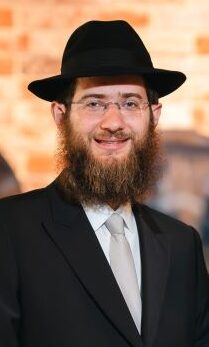
“Kadish LaNeshama” was created for the ascension of the soul of my dear brother Shmuel, may he rest in peace.
Shmuel was hurt in a severe car accident and after half a year of suffering, he passed away, being only 22. This tragic story took place in 2018 and was covered on news websites.
for the ascension of the soul of my dear brother Shmuel, may he rest in peace. we established “Kadish LaNeshama” (lit. Kaddish for the Soul) to help families through halachic guidance at the time of death, and answers to halachic questions.
The site serves many users from all over the world and is a reliable address for a comprehensive study of all mourning laws.
The content of the site is based on the Shulchan Aruch, the Rama and the latest rulings, and in accordance with all the customs of the Ashkenazi and Sephardic people of Israel.
*
The mourning laws and customs on the site were written by Rabbi Yosef (certified as a rabbi by Rabbi Meir Aharon, may he rest in peace, head of the Or Yaakov Beit Midrash + the Chief Rabbinate’s certification exam on the matter of mourning.)
Through the “Ask the Rabbi” section many Halakha-related questions are received, we do our best to give a quick response to everyone.
With you through difficult times
Rabbi Yossef
“Kadish LaNeshama”
Kiryat Chabad
The holy city Zefat.
Frequently Asked Questions About Our Kaddish Service
Where is the Kaddish recited?
The Kaddish is recited at the Heichal Levi Yitzchak Synagogue in Kiryat Chabad, in the holy city of Safed, during the Shacharis, Mincha, and Maariv services, with a minyan.
What is included in addition to the recitation of Kaddish?
Alongside the recitation of Kaddish during the daily prayers, Mishnayos are studied each day for the elevation of the soul of the departed, in accordance with Chabad custom: Chapter Seven of Tractate Mikvaos and Chapter Twenty-Four of Tractate Keilim.
At the conclusion of the study, an additional Kaddish DeRabbanan is recited for the elevation of the soul of the departed.
When does the recitation of Kaddish begin?
We begin reciting Kaddish as soon as the required details have been received and the arrangement has been completed, beginning with the next prayer service according to Israel time.
What details do I need to provide?
To arrange the recitation of Kaddish, we ask for the Hebrew name of the departed and the name of their father, together with the information needed to determine the appropriate period for the recitation of Kaddish.
Will I receive confirmation that Kaddish is being recited?
Yes. Once the recitation has begun, you will receive confirmation that the details have been received and that Kaddish is being recited for the elevation of the soul of your loved one.
You are welcome to contact us with any questions during the period or to request an update.
For how long is Kaddish recited: eleven months or twelve?
Kaddish is recited for eleven months. If your family follows the Sephardic or Edot HaMizrach custom of reciting Kaddish for twelve months less one week, please let us know.
Is Kaddish recited according to the Ashkenazi or Sephardic rite?
Kaddish is recited as part of a Chabad minyan, following the rite of the Tehillat Hashem siddur.

What is the custom of saying Kaddish for the deceased?
It is an ancient Jewish custom to say Mourner’s Kaddish prayer for a deceased relative.
The Kaddish prayer was created in the Aramaic language and translated to Hebrew means faith and trust in God, even in the harsh times of mourning.
History
Throughout the generations, the Jewish people observed the custom of saying Kaddish to help the ascension of a soul of a loved one who passed away, thus honoring their memory.
Beyond being an important mitzvah, the Kaddish prayer is a beautiful and moving prayer and in fact includes no mention of death, only a glorification of God and a recognition of the person saying the prayer that everything in our world happens according to the divine plan.
Respect for the deceased
By saying Kaddish, we respect the deceased’s memory but also gather strength during the time of mourning.
According to Jewish sources, the Kaddish prayer is very beneficial for the soul of the deceased, granting it enjoyment and peace and raising it to heaven.
Saying the Kaddish prayer is an important mitzvah and the highest expression of love and respect that we wish to share without our loved ones who passed away, you can learn more in the article about why we say Kaddish.
When and where is the Kaddish prayer said?
The Kaddish prayer is said during the hahrit, mincha and arvit prayers in synagogue, with at least 10 people in attendance, in the period after the person passed away.
How long does one say Kaddish for a father / mother?
Ashkenazi custom
For 11 months.
Sephardi custom
lmost a full year, the custom is stopped for a week of the 11th month, and then saying the Kaddish prayer is resumed for the remaining three weeks.
In addition, Kaddish is said once a year on the Hebrew date of the passing.
The reason the Kaddish prayer isn’t said for full 12 months is that the goal of the Kaddish prayer is to save the soul from hell, and the holy books say that the soul of evil people is tried for 12 months, and so to avoid the interpretation that the father or mother were evil, who need Kaddish to be said for them for 12 whole months, we make sure to stop and not say Kaddish for a full year, but rather as explained above in accordance with the division of customs among the people of Israel.
Saying Kaddish for one’s grandfather or grandmother
It is customary in Halakha that along with respecting one’s parents, grandchildren should also be sure to say Kaddish in cases where the parent is not able to say Kaddish or if the parent is no longer among the living.
Is it possible to let another person say Kaddish instead of the son?
Although it is preferable for the son to say Kaddish himself, in cases where the son is unable to for various reasons, the Halakha states that a representative can be appointed to say Kaddish for the deceased.
If a representative has been appointed to say Kaddish, they must mention that the Kaddish is said for the deceased and must say the deceased’s name before the prayer.
Kaddish Service
The holy books state that there can be good reason for the Kaddish to be said in exchange for payment.
The reason is, that for Kaddish to be said by a representative to be spiritually assigned to the soul of the deceased, the family should pay from its own money, and it is by payment that the spiritual association is created.
In the words of the Halakha, it is better for [the saying of Kaddish] to be in exchange for payment rather than free, and this is the meaning of reading Kaddish in exchange for payment.
The Halakha source for the mitzvah of saying Kaddish – a wonderful story about Rabbi Akiva
The mitzvah of saying Kaddish for the deceased, is found in Beit Yosef and in the words of Moses Isserles – Mourning Customs 376.
As a reason for the rule of saying Kaddish, Beit Yosef quotes a terrible story which is originally found in the holy Zohar book, as well as in other texts. The (lightly edited) contents of the story are as follows:
It is told about Rabbi Akiva:
Once, a Jew who had passed away had revealed himself to Rabbi Akiva and told him he is in great torment.
Rabbi Akiva asked him why. The deceased replied that when he was alive, he committed severe transgressions, and now that he has passed away, he is suffering terribly in hell.
Rabbi Akiva asked the deceased:
And yet, what can be done to ease your fate?
The deceased replied to Rabbi Akiva, that he heard it said that if his son were to say Kaddish for him, it could save him from his fate.
Straight away, Rabbi Akiva began searching for the deceased’s son, and when he found him, he instructed him on religious matters until he could say Kaddish on his own.
Within an hour of the son saying Kaddish, the father was saved from his fate in hell.
The deceased revealed himself to Rabbi Akiva
It is told that when the deceased revealed himself to Rabbi Akiva, he blessed him and thanked him from the bottom of his heart for the grace he has shown him.
From this story, we learn of the importance of saying Kaddish for the soul of the deceased, and as we wrote, the above story is the Halakha source for the mitzvah of saying Kaddish, as is stated in the words of Moses Isserles – Mourning Customs 376 and we will quote him in emphasis:
“It was found in the sermons that we should say Kaddish for a father” – the sermons refer to the above story with Rabbi Akiva which appeared in the Zohar, in the sermons, and other sources.
“Hence it was customary to say Kaddish for one’s father and mother… for 12 months… and it was customary… to do so for only 11 months so that their fathers and mothers wouldn’t mistakenly be considered evil, because the soul of the evil is tried for 12 months ” – that is, following the terrible story with Rabbi Akiva, the custom is to say Kaddish for a year, and earlier we explained in detail the reason why we don’t say Kaddish for a full 12 months, but rather take a break.
The reason the Kaddish prayer is said in Aramaic
There are several reasons why the Mourner’s Kaddish prayer is written in Aramaic.
1. In the past, Aramaic was an international language spoken by all, and so the prayer was written in a language everyone could understand.
2. It is known that the angels don’t understand Aramaic, so the wise men of the time wrote the Kaddish prayer in this language so as not to evoke their envy.